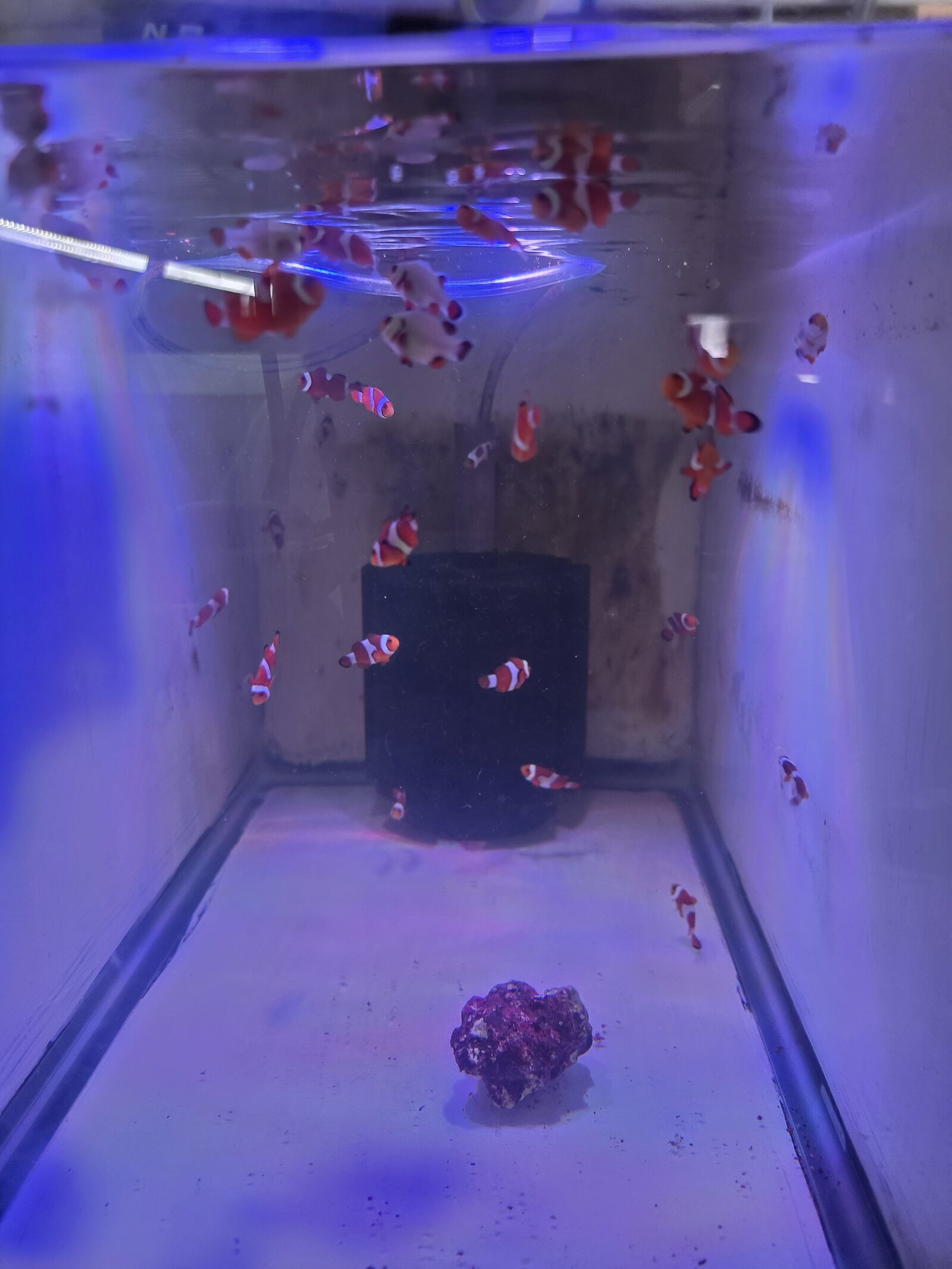
Inside Our Hatchery: How Captive-Bred Clownfish Are Raised Day by Day
When you browse tank-raised clownfish online, it is easy to picture the finished fish in a reef display and miss everything that happens before that moment. At Blue Eyed Clowns, the work starts long before packaging and overnight shipping. It lives in quiet routines: lights on, pumps checked, pairs fed, eggs watched, and juveniles moved into grow-out when they are ready.
This is a friendly look behind the scenes—not a veterinary guide, and not a promise about any one tank on any one morning. It is simply how a small captive-bred hatchery thinks about care so the fish that reach your aquarium already know aquarium life.
Why routine matters more than hype
Captive-bred clownfish succeed for reef keepers for practical reasons. They grow up eating prepared foods. They live in aquarium conditions from the start. And every tank-raised fish means one less fish taken from a wild reef.
Those benefits do not appear by accident. They come from stable husbandry: clean water, consistent feeding, daily observation, and patience while fish grow. At Blue Eyed Clowns, co-founders Chris Wright and Mike Kay split that work between fish health and genetics on one side, and breeding systems, water quality, and day-to-day hatchery care on the other. Mike handles much of the hands-on systems work that keeps the racks running smoothly.
How our systems are organized
Think of the hatchery like a workshop with different stations, each with a job.
We use labeled tanks so anyone on the team can tell where a fish is in its journey. Labels follow a simple pattern: a letter for the system bank, a middle number for the row, and a number after the dash for the tank. So a label like B3-10 means bank B, row 3, tank 10.
Different banks have different roles:
- Mated-pair banks hold breeding pairs that keep the next generation going.
- Hatch banks are where early life gets focused attention.
- Grow-out banks give juveniles room and time to strengthen before they are ready for customers.
That layout keeps the workflow clear: pairs produce, hatch systems start young fish, and grow-out systems finish raising confident, feeding clownfish.
A morning that starts with the basics
A hatchery day begins with checks reef keepers already understand—just multiplied across more tanks.
Lights come on. Water pumps and air pumps get a look. Then we check hatch status and note any new egg lays. Those open-of-day habits sound simple because they are. Simple is the point. Small systems fail when the basics are skipped.
In the evening, the close-down is just as practical: pumps checked again, unhatched eggs covered as needed, and lights off. Predictable light and equipment routines help keep stress low for fish and people alike.
Feeding is part of husbandry, not an afterthought
Breeding pairs need steady nutrition. In our mated-pair banks, feeding is spread through the day with small portions of quality prepared foods rather than one giant meal. That mirrors what we want customers to do at home: offer a little, watch the response, and keep leftovers from fouling the water.
For early life stages, live foods such as rotifers are part of the hatchery toolkit. We keep that protocol simple and consistent so young fish get what they need without complicating the daily list.
When fish are later selected for shipping, we look for the same things a careful buyer wants: strong swimming, active interest at feeding time, and calm, healthy behavior. Only fish that meet those everyday standards are prepared for the trip to your door.
What reef keepers can borrow from hatchery habits
You do not need a full rack of banks to use hatchery thinking at home:
- Keep water boring in the best way. Stable temperature, salinity, and clean filtration matter more than constant tinkering.
- Feed small and watch closely. Captive-bred clownfish usually take prepared foods well. Offer modest portions and notice appetite changes early.
- Give new arrivals a calm first day. Dim lights, a quiet tank, and patient acclimation beat rushing a photo for social media.
- Observe before you diagnose. Clownfish can host a corner, rock, powerhead, or coral instead of an anemone. Odd-looking behavior is often normal settling-in—though sudden appetite loss or distress is a reason to slow down and get good advice.
- Buy tank-raised when you can. Aquarium-raised fish are already practicing the lifestyle your reef provides.
None of this replaces professional veterinary care when a fish is truly sick. It is everyday stewardship: the same quiet discipline that makes hatchery fish easier to keep.
From our tanks to your reef
Ordering from Blue Eyed Clowns is meant to feel straightforward. You choose a morph that fits your tank—classic Standard Ocellaris for a hardy starter, Snowflake for unique white patterning, or a designer option like Blue Ghost Storm when you want a showpiece. We confirm health and shipping timing, then pack for overnight delivery with acclimation guidance ready when the box arrives.
Behind that short checklist is the longer story: pair care, hatch watches, grow-out time, and daily observation. That is the part we are proudest of, even when it never appears in a product photo.
If you are building or refreshing a reef and want captive-bred clownfish raised for aquarium life, browse what is available at blueeyedclowns.com, or message us anytime with questions about morphs, shipping, or settling a new fish in. We are happy to help you start with confidence.